




The recovery advice that tells you to meditate for 20 minutes, walk for 45, stretch for 30, and sleep for 9 hours assumes a life that, if you had, you wouldn't need recovery advice. Real adults have children, jobs, and roof repairs. What they have reliably is five minutes.
- Slow breathing
- Daylight walk
- Foot-ball massage
- 3-line journal
Five-minute resets, stacked through the day, produce surprisingly large cumulative effects on stress, stiffness, and mood. Here are the twelve I recommend most often, what each one actually does, and when to reach for which.
Why five minutes moves the needle
The physiology angle: the autonomic nervous system responds to inputs within seconds. A 2-minute slow-breath burst measurably shifts HRV. A 3-minute walk after lunch measurably blunts the post-meal glucose peak. A 5-minute wrist-and-neck mobility session measurably reduces muscle tone in the trapezius.
The behavioural angle: something done at Tuesday lunchtime beats something scheduled for Saturday. Micro-resets are robust against busy weeks because they don't need a calendar slot.
The twelve that work
Ranked roughly by evidence strength, with what each is good for:
- 5 min of 6-bpm breathing. Nervous-system reset; best between high-stress tasks.
- 5 min walk outside. Circadian anchor if before 10am; glucose-blunting if after a meal.
- 3 min of standing + hip-hinge + calf raises. Good before long periods of sitting; perfect PF prep.
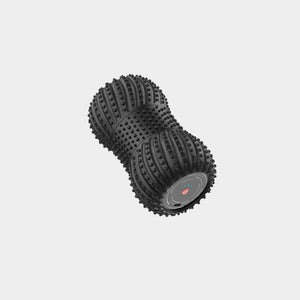
- 5 min foot massage with a ball. Gentle, slow; specifically useful for PF midday flares.
- 5 min of deliberate slow sipping of water. Small, underrated: hydration + pause.
- 5 min of tea-ritual or coffee-ritual with no phone. Behavioural pause, parasympathetic shift.
- 5 min window/sunlight stand. Daylight on eyes; fastest cue for circadian re-anchoring.
- 5 min shoulder and neck mobility. Targeted where modern work tenses most.
- 5 min of cold face wash (not full cold plunge). Dives heart rate; gentle vagal nudge.
- 5 min of journaling — 3 lines, one prompt. "What's the one thing I want to end today having done?"
- 5 min of listening-only to music. Not as background — eyes closed, fully attending.
- 5 min walking a task down a phone line. Pacing while on a call; easy to install.
Each of those has either solid evidence or extremely low cost with plausible physiological benefit. Pick 3-4; rotate the rest.
Stacking resets through the day
The highest-yield pattern for a normal workday:
- On waking — #2 + #7AMShort walk outside or to the window for 5 minutes of daylight. Sets circadian rhythm for the day.
- Mid-morning — #1 or #810:30Before the first heavy task, 5 minutes of slow breathing OR shoulder/neck mobility. Choose the one you need.
- Post-lunch — #2 again13:305-10 minute walk. Cuts post-prandial glucose, reduces afternoon slump.
- Mid-afternoon — #3 or #415:30Movement reset for the body — standing mobility or a foot-ball session if you have PF.
- End of day — #10EOD3 lines of journaling. Marks the end of "work brain" so your evening isn't polluted by it.
Five five-minute interventions = 25 minutes of recovery you would almost certainly not otherwise allocate. It is cheaper than any of the real ones, in every sense.
“The person who does five minutes on a bad Tuesday beats the person who plans 45 minutes for a Saturday that never arrives.”
What doesn't work
Some popular "resets" that the evidence doesn't really support:
- Scrolling as a break. It is not recovery. It is a different kind of task. The nervous system gets no benefit and often a detriment.
- Quick intense exercise — "five burpees!" This is training, not recovery. Fine as a habit; don't confuse it with a reset.
- Over-caffeinated breaks. A second espresso is not a pause; it's an input.
- Social media "mindfulness." Unless it is actual practice, the notifications-while-breathing combination is net-negative.
Making them automatic
A few anchors help:
- Chain them to existing events. "After I make coffee, I breathe." Not "at 10:30 I will breathe."
- Keep tools visible. A ball on your desk. Your slides by the door. Shoes by the chair.
- Track only for 2 weeks. After that, trust the habit. Long-term tracking converts pleasure into duty.
- Forgive yourself when you miss one. The person who does 4 out of 5 every day wins.
Pair the best three of these with a proper morning routine and an evening walk, and you have built a nervous-system maintenance plan that would have cost a lot, if anyone sold it.
References
- Dunstan DW et al. Breaking up prolonged sitting reduces postprandial glucose and insulin responses. Diabetes Care, 2012.
- Oppezzo M, Schwartz DL. Give your ideas some legs: the positive effect of walking on creative thinking. Journal of Experimental Psychology, 2014.
- Kabat-Zinn J. Mindfulness-based interventions in context. Clinical Psychology: Science and Practice, 2003.


